
Soverel Turns a Flopped Straight Into a Flush, Then Claims Record 18th PGT Title

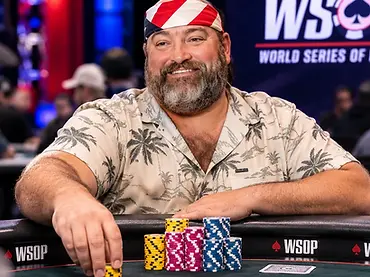
Original AI-generated illustrative portrayal selected for Sam Soverel’s PGT Sprint article. The poker-table action and PGT-themed backdrop are imagined; this is not an authentic photograph of Soverel or his 2026 tournament.
Poker Pulse original AI-generated illustrative artwork — not an authentic photograph or event scene.
Sam Soverel flopped the nut straight against Jeremy Becker, turned it into a river flush and claimed a record 18th PGT title worth $195,200.
Sam Soverel already had the chip lead when the critical confrontation of PGT Sprint Event #5 arrived. Against Jeremy Becker, he flopped the nut straight, improved to a flush on the river and won the kind of pot that can tilt a seven-handed final table from competitive to lopsided. By the end of the event, the lead had become a championship: $195,200, 195 PGT points and a record-extending 18th career PokerGO Tour title.
The outcome was not merely another high-stakes name at the top of a results page. Soverel's fifth PGT victory of 2026 came from a 61-entry $10,500 no-limit hold'em field, and the final table featured several players chasing valuable points in a crowded season-long race. The victory carried both an individual tournament story and an immediate consequence for the tour leaderboard.
The most revealing moment was the hand against Becker. The eventual result was decided later, but that pot explained why Soverel entered heads-up with such an advantage.
The straight, the flush and a huge final-table swing
PokerGO's official recap describes Soverel opening from the small blind with nine-six of spades. Becker, holding ace-king, three-bet from the big blind and Soverel called. An eight-seven-five flop with two spades gave Soverel the nut straight immediately. He chose a small leading bet; Becker continued.
The turn brought an ace, improving Becker to top pair with top kicker. Soverel checked and called another bet, allowing the hand to move to the river. The final card was the two of spades: Soverel now held a flush as well as his earlier straight. After he checked, Becker bet most of his remaining stack. Soverel moved all in and Becker committed his last chips.
Becker finished fifth, collecting $45,750. The outcome was devastating for his tournament but valuable for the sporting story because the published hand shows the exact progression: a strong made hand, an improved opponent, a still-stronger river holding and a costly final decision. No invented dialogue or guesswork about private emotions is necessary to understand the swing.
It was also the type of hand that separates a final-table report from a one-paragraph press release. The eventual champion had the lead before the hand; afterward he was much further clear of the remaining field.
Nine were paid, seven reached the final table
The event generated a $610,000 prize pool, with nine paid places. Sam Laskowitz finished ninth and Victoria Livschitz eighth before the final table narrowed to seven. Soverel arrived at that final seven as chip leader, while his opponents still had valuable position and prize money to contest.
Kent Stephens was eliminated in seventh for $24,400 and Michael Berk followed in sixth for $33,550. Becker's fifth-place exit removed another contender. Nick Seward then finished fourth for $61,000, and Kuan Han Lee took third for $85,400, leaving David Coleman as Soverel's last opponent.
The payout ladder shows why late hands matter even when the champion appears to be in control. Coleman secured $122,000 as runner-up; Lee earned $85,400 for third. The differences are real and confirmed, not hypothetical calculations from the $10,500 entry fee.
Soverel's dominance did not need embellishment. It emerged in the sourced eliminations and the changing stacks, not in a fictional speech or imagined celebration.
Two hands were enough to finish heads-up
According to the official report, Coleman entered heads-up facing roughly a four-to-one chip deficit. The match lasted only two hands. On the second, Coleman got his chips in while holding the stronger hand, but Soverel improved to a pair on the river and claimed the last pot.
That is a sharp contrast with the earlier Becker confrontation. Soverel built a dominant stack by taking down a major pot with a powerful holding. He then sealed the championship when the final board turned a behind-at-the-moment confrontation into the last winning hand. Both are legitimate elements of the same title run; neither should be flattened into 'led from start to finish' without the action that explains how.
Coleman's runner-up finish was not insignificant. Beyond the $122,000, he also picked up 122 PGT points, important in a late-season qualification chase. The value of that result belongs to the dated PGT leaderboard, not to an unchanging rank readers should assume will hold through the next event.
Record eighteen matters—and so does the date
Soverel's win extended his tour record to 18 PGT titles, with five in 2026. The victory gave him 195 points and lifted him into eighth on the season-long leaderboard as reported by PokerGO on 3 November, with 1,590 points. The standings are a dated snapshot; the later Sprint events can still shift the order.
The same report noted that Coleman and Seward had moved closer to the top-40 cutoff for the season-ending PGT Championship. Those points add a second competitive dimension to the final table. A late elimination can change both immediate prize money and the next tournament opportunity, subject to the tour's published qualification conditions.
The Sprint's format magnifies those effects. The first four tournaments carried $5,300 buy-ins, while the final three rose to $10,500. Event #5 therefore sat at the start of the higher-buy-in stage, and its points and payout must be reported under that event rather than attached to a different Sprint result.
The result that survives the headline
The final ranking is clear: Soverel first for $195,200; Coleman second for $122,000; Lee third for $85,400. But the meaning of the victory is in the sequence that produced it. The nut-straight flop against Becker, the river flush, the commanding heads-up lead and the two-hand finish explain why Event #5 became Soverel's record-setting 18th title.
The rest of the season could still change the Player of the Year table. It cannot change the completed result. The fifth event of the 2026 PGT Sprint now has a champion and a decisive competitive story—and both belong in the record.
Primary sources
- PokerGO Tour: Sam Soverel Wins 2026 PGT Sprint Event #5 for $195,200, 3 November 2026
- PokerGO Tour: Event #5 final table and live reporting
Original Poker Pulse sourced match report. Hand descriptions, player standings and payouts follow PokerGO's official account; no eyewitness presence or imagined quotations are claimed.
Editorial Sources
This report is based on independently written editorial analysis of sourced facts, not a republished source article.
Primary information sourceSource check: 6 Nov 2026
Keep reading

 PlayersIllustrative artwork
From Short Stack to Sprint Champion: Wilson Turns the Tables on Zamani for $110,600
Brock Wilson turned a short-stack struggle into a $110,600 PGT Sprint victory, overcoming Martin Zamani to earn his fifth tour title of 2026.
By Daniel Reed · AI-assisted desk
Players/1 day ago

 PlayersIllustrative artwork
Rheem Calls Down a Bluff, Then Wins With Seven-High to Take PGT Sprint Opener
A bluff catch with pocket tens flipped the final; Chino Rheem finished with seven-high to win PGT Sprint Event #1 and $119,600.
By Daniel Reed · AI-assisted desk
Players/1 day ago

 PlayersIllustrative artwork
A River Call Turns the Tahoe Final: Stewart Wins First Circuit Main Event and Ninth Ring
A pivotal river call helped Scott Stewart beat Tyler Parker at Lake Tahoe, earning his first WSOP Circuit Main Event title and ninth ring.
By Daniel Reed · AI-assisted desk
Players/1 day ago